eSignature for Legal: Sign, Send, and Close Faster
Collect legally binding signatures on retainers, NDAs, settlement agreements, and other legal documents in minutes. Fill helps law firms simplify document signing with secure workflows, court-admissible audit trails, and compliance with ESIGN, UETA, and eIDAS.
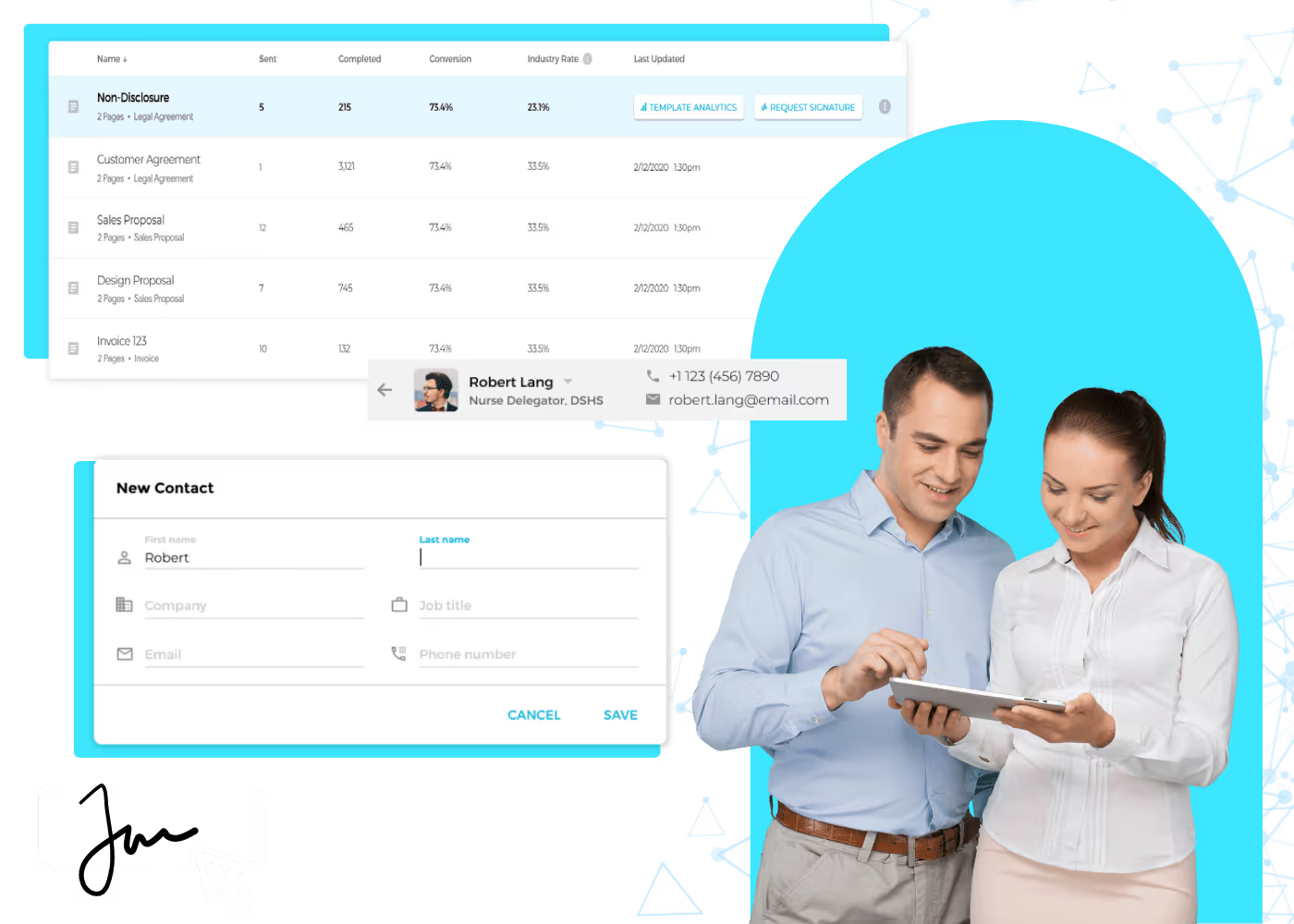
How to Get a Legal Document Signed in 3 Steps

Upload your legal document or choose a reusable template

Add signature fields and send a secure signing link

Download the completed document with a full audit trail
Every Document Your Firm Needs to Get Signed

Retainer Agreements & Engagement Letters

NDAs & Confidentiality Agreements

Client Intake &
Onboarding Forms

Settlement Agreements

Employment & HR Contracts

Affidavits & Sworn Statements
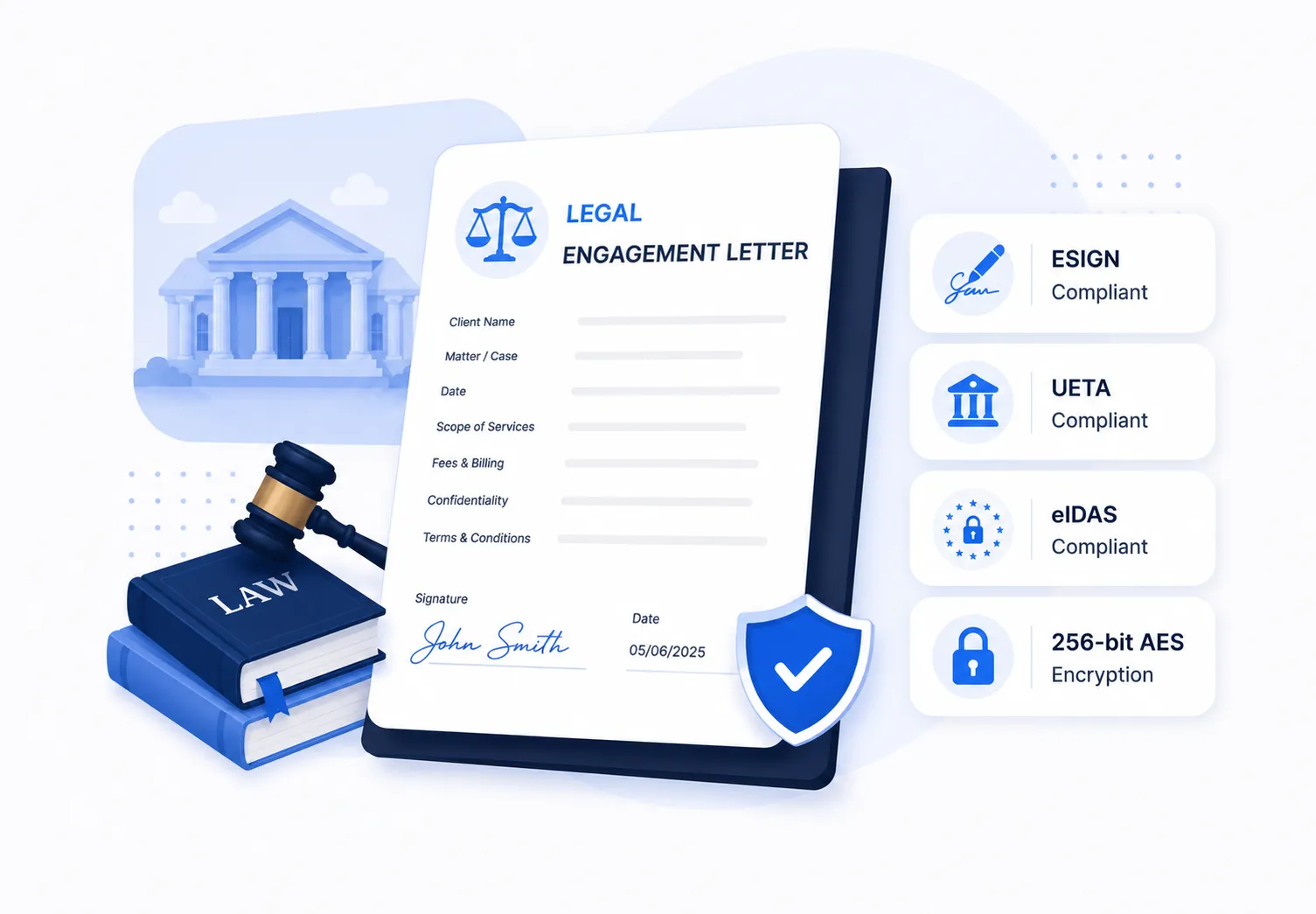
Are eSignatures Legally Binding?
Yes. In most situations, electronic signatures are legally binding when they meet the requirements established by the ESIGN Act and UETA in the United States. Fill also supports eIDAS requirements for organizations working internationally.
However, certain documents remain excluded from electronic signature laws, including:
- Wills, codicils, and testamentary trusts
- Adoption and divorce documents
- Court orders and official court notices
- Certain foreclosure and eviction notices
- Documents specifically excluded under applicable law
Note: This is general information only. It’s not legal advice. Always verify the requirements that apply in your jurisdiction. For a detailed explanation, read our guide to legal signature requirements.
Fill vs DocuSign for Law Firms
Many law firms choose DocuSign because it's familiar. Others choose Fill because it delivers the core features legal professionals need without enterprise-level pricing or unnecessary complexity.
Simple Pricing for Solo Practitioners & Growing Firms
Whether you're an independent attorney sending a handful of engagement letters each month or a growing practice managing hundreds of client documents, Fill offers predictable pricing without charging per signature.
Trusted by Legal Professionals

What You Get with Fill
Electronic signatures

Real-time audit trails

Reusable templates

Signing Order

API + 6,000+ Zapier Integrations

Mobile apps
Fill For Every Industry


Know more about Fill eSignature for legal services
Are electronic signatures legally binding?
Yes. Electronic signatures are legally binding for most business and legal documents when they comply with applicable laws such as ESIGN and UETA. Some document types remain excluded.
Can I use eSignatures for retainer agreements?
Yes. Retainer agreements and engagement letters are commonly signed electronically, helping law firms onboard new clients more efficiently.
What legal documents cannot be signed electronically?
Certain documents, including wills, testamentary trusts, adoption papers, divorce documents, and some court notices, typically require traditional signatures or follow separate legal requirements.
Do signers need a Fill account to sign?
No. Recipients can securely review and sign documents from their browser without creating a Fill account. Learn more about how Fill electronic signatures work.
Is Fill's audit trail admissible in court?
Fill generates an audit trail that records signer actions, timestamps, email addresses, and document history to help support authenticity. Whether evidence is admissible depends on the facts of the case and applicable law.
Does Fill integrate with legal case management software?
Fill integrates with thousands of applications through Zapier and offers an API for custom workflows, making it easy to connect with many legal practice management systems.
Is Fill HIPAA compliant for law firms handling PHI?
Yes. Law firms handling protected health information can use Fill's HIPAA-compliant plan, which includes a signed Business Associate Agreement (BAA) and safeguards designed for regulated workflows.